The Versatile Workflow Engine: Integrating Gingham Digital Paper Backgrounds
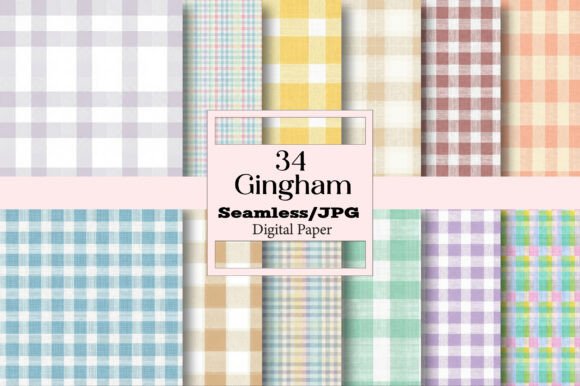
In creative and professional workflows, consistency and aesthetic foundation are critical. Gingham Digital Paper Backgrounds serve not as a final product, but as a foundational asset—a versatile, high-resolution graphical texture that integrates into numerous projects at various stages. Their core value lies in their seamless application, providing a uniform, classic pattern that unifies disparate elements across physical and digital mediums. Understanding where this asset fits in your broader process is key to leveraging its full potential.
Establishing a Cohesive Brand or Project Identity
The initial phase of any creative endeavor, whether launching a small business product line or planning a personal event like a wedding, requires establishing a visual tone. Here, Gingham Digital Paper Backgrounds function as a preparatory tool. Before designing specific items, you can select a gingham color scheme that defines your project's palette. This decision impacts all subsequent assets, ensuring your tote bags, notebook covers, and social media graphics share a common visual thread. This early integration prevents aesthetic drift and saves time later in the workflow.
From Digital Asset to Physical Product
The practical implementation moves from digital preparation to physical creation. For entrepreneurs in the sublimation or printable fabric space, the high-resolution 300 DPI JPG files are ready for immediate use in design software. The process involves resizing the dimensions to suit your specific product template—a tumbler wrap, a pillow case, or a candle label. This step highlights the asset's compatibility; it interacts seamlessly with design platforms like Adobe Suite or Canva, acting as a base layer. Your workflow might involve placing the gingham background, then overlaying text or other graphics for your personalized pillows or soap labels, ensuring a professional, cohesive finish.
Streamlining Multi-Platform Content Creation
For marketers, bloggers, and freelancers managing multiple content outlets, maintaining visual consistency across platforms is a common challenge. Gingham Digital Paper Backgrounds address this by serving as a reusable resource. You can create a set of derivative graphics from one master file: a website graphic, a trendy social media post background, and a digital presentation slide all share the same underlying pattern. This approach enhances organization and efficiency. By storing the original file in a dedicated "Brand Assets" folder, you ensure long-term use and quality control, as every new project starts from the same high-quality source.
Integration in Handmade and Craft Workflows
The hobbyist or small business owner engaged in paper crafts, junk journals, or KDP (Kindle Direct Publishing) operates in a mixed digital-and-analog workflow. Here, the gingham background is used during the production phase. After finalizing a digital design for a scrapbook decoupage page or a book cover, you proceed to printing. The high resolution ensures no pixelation occurs when the image is physically printed for use in mini junk journals or as printable fabric for cute tote bags. This step underscores the importance of asset quality in the execution stage; a poor-resolution background would undermine the entire craft project.
Practical Implementation Tips for Efficient Use
To integrate Gingham Digital Paper Backgrounds smoothly, consider your workflow's typical sequence. First, catalog your needs: list all intended outputs, from party decorations to playing cards. Second, create a batch of template files in your design software with the gingham asset already placed, appropriately sized for each use case (e.g., a square for social media, a rectangle for a mug sublimation). This preparation turns a single digital paper into a ready-made system, drastically speeding up future projects. Furthermore, always keep the original watermark-free file untouched; use copies for specific projects to preserve flexibility for resizing later.
Ensuring Compatibility and Long-Term Value
A key observation for professionals is the asset's role in scalability. As your business or creative range expands—from adding new products like t-shirts to offering wedding invitation suites—the same gingham background can be adapted. Its seamless pattern means it can tile infinitely without a visible repeat, making it ideal for larger format applications like wall art or website backgrounds without requiring additional design work. This inherent usability makes it a cost-effective, long-term resource within your digital asset library.
Closing the Loop: From Project Completion to Asset Reuse
After a project concludes, such as after a successful baby shower where the gingham theme was used on plates, napkins, and invitations, the digital backgrounds remain available. They can be archived alongside project notes, ready for future reuse or slight modification for a different event, like a birthday. This post-project phase highlights the asset's enduring utility. It interacts with your organizational decisions, encouraging you to maintain a well-structured digital archive so that these foundational graphics continue to support efficiency and consistency in all your future creative workflows.