The Versatile Workflow Asset: Integrating Abstract Colorful Seamless Patterns
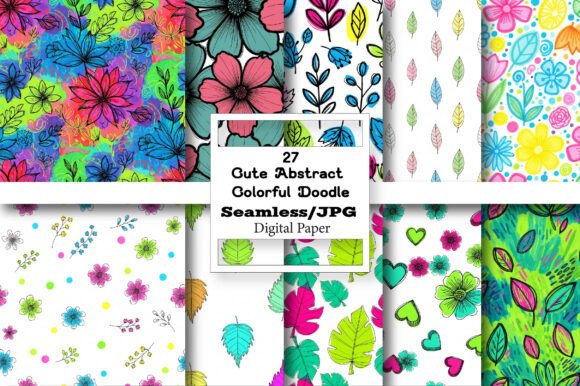
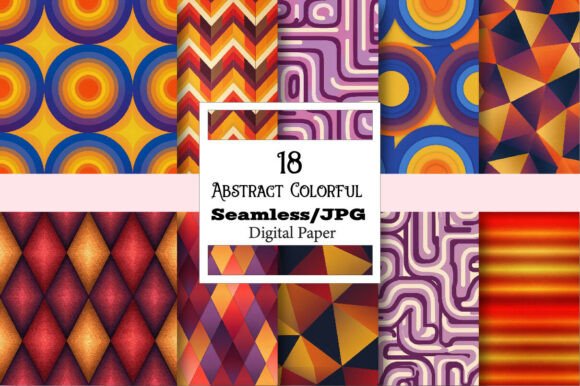
In the toolkit of modern creators and entrepreneurs, digital assets form the foundational layer for countless projects. Among these, Abstract Colorful Seamless Patterns stand out as a uniquely flexible resource. They are not merely static graphics; they are high-resolution, repeatable design elements engineered for integration into a broad spectrum of production workflows. Their value lies in their seamless nature—meaning the pattern can tile infinitely without visible edges—and their adaptability, allowing them to serve as both background context and primary decorative element across physical and digital mediums.
Acquiring such a pattern pack, typically delivered as a watermark-free JPG at 300 DPI, is often the first step in a resource-gathering phase. This phase precedes the active creative or manufacturing process. For a small business owner planning a new product line, or a blogger refreshing their visual brand, these patterns become a stock asset, ready to be resized and applied as needed. Their inclusion early in the planning stage ensures visual consistency can be maintained from initial concept through to final output, whether that output is a sublimated tumbler, a series of social media posts, or a set of wedding invitations.
Fitting Patterns into Project Lifecycles
The application of Abstract Colorful Seamless Patterns interacts dynamically with other tools and decisions throughout a project’s lifecycle. Consider the workflow for designing a custom tote bag. The process begins with concept and market research, followed by the selection of a base material and bag style. Here, the pattern is selected and tested against the bag’s dimensions and the sublimation printer or screen-printing method’s specifications. The pattern file must be resized—a straightforward task given its high resolution—and often integrated into a larger design file using software like Adobe Photoshop or Canva, alongside logos or text.
This interaction highlights the pattern’s role as a core component within a larger assembly. Its compatibility with various printing techniques—sublimation, digital print, inkjet—is a key factor. A pattern’s color profile and complexity must be assessed for compatibility with the chosen output method early in the execution phase to avoid quality issues. For a digital project, such as creating a website background, the pattern is integrated directly into the CSS or graphic template of the site builder platform, influencing decisions about overlay text color and layout to maintain readability and aesthetic balance.
Streamlining Multi-Platform Consistency
For marketers and content creators managing a brand, Abstract Colorful Seamless Patterns offer a powerful solution for maintaining visual coherence across disparate platforms. A single pattern file can be adapted for use as a YouTube channel background, a series of Instagram story templates, and the wrapping paper for product packaging. This multiplies the utility of a single asset purchase and drastically reduces the time spent sourcing different graphics for each channel.
The practical implementation involves creating a master sized file for each platform’s specific dimension requirements—a social media graphic might require a 1080x1080px crop, while a mug template requires a cylindrical wrap layout. Organization is critical; storing the original high-res file and clearly naming each derivative version prevents confusion and accelerates future updates. This approach turns a simple pattern into a central pillar of a brand’s visual identity system, interacting seamlessly with other brand assets like font libraries and logo variants.
Practical Integration: From Storage to Application
Effective long-term use of these digital patterns hinges on how they are incorporated into an individual’s or team’s resource management system. Upon download, the immediate step is not necessarily use, but organization. Filing the JPG files into a clearly structured digital library—perhaps categorized by color theme or intended use (e.g., “Backgrounds,” “Product Decor”)—ensures they remain a usable asset long after the initial project is complete. This foresight supports efficiency, allowing quick retrieval for spontaneous projects like making last-minute party napkins or a personalized gift label.
The patterns also interact with project management and collaboration tools. For a design team working on a client’s baby shower materials, the selected pattern can be uploaded to a shared cloud folder alongside invitation copy and layout mockups. It becomes a reference point for the entire project suite, ensuring the stationery, plates, and digital invitations share a common visual thread. This level of consistency, managed through shared assets, elevates the perceived quality and cohesiveness of the final deliverables.
Quality Control and Adaptation Considerations
While the patterns are designed for versatility, successful integration requires mindful quality control. Before committing to a large print run—for example, producing playing cards or a fabric line—it is advisable to produce a physical test sample. This reveals how the pattern’s colors translate to the specific substrate (paper, polyester, cotton) and whether the seamless repeat appears as intended on the product’s shape. This test phase is a crucial intersection between the digital asset and the physical manufacturing process.
Furthermore, the pattern’s usability extends into adaptation. A keen creator might use portions of the pattern, isolating specific colorful elements to create matching stickers or decoupage cut-outs for a junk journal. This breaks the pattern down into constituent parts, interacting with cutting machines or manual craft techniques. The high resolution ensures even these isolated elements remain crisp and detailed, supporting both macro and micro applications within the same project ecosystem.
Enabling Creative Efficiency and Scalability
Ultimately, Abstract Colorful Seamless Patterns function as efficiency engines within creative and commercial workflows. For a freelance graphic designer, they provide a quick-start solution for client projects requiring custom backgrounds, eliminating hours of manual pattern creation. For a DIY entrepreneur selling sublimated mugs, they enable rapid product line expansion; a new pattern can generate a whole new collection of designs without requiring new photography or complex illustration.
The scalability is profound. The same pattern purchased for a one-off handmade stationery project can, months later, become the basis for a digital papers pack sold on a platform like Etsy or used in a KDP (Kindle Direct Publishing) notebook cover. This long-term utility underscores the importance of selecting patterns that are not only visually appealing but also align with one’s broader creative or business direction. Their integration is not a one-time event but a recurring process, popping up at the inception of new ideas and evolving alongside one’s skills and business offerings.
In daily practice, these assets reduce the friction between idea and execution. They sit ready in the digital inventory, a colorful and professional solution waiting to be mapped onto the next blank canvas—whether that canvas is a physical tumbler, a website’s empty header, or the cover of a new scrapbook. By understanding their role as a integrative workflow component, creators can leverage them not just as decoration, but as a strategic tool for consistency, speed, and boundless creative application.